
Traditionally, a person’s identity is defined by his biology. Like we differentiate human beings into males and females on the basis of their anatomy. But according to the French philosopher Deleuze, when we define human beings in such a way, we thereby limit his identity to fixed ideas. For example, when we categorize human beings into males and females, we put limits to what they can or can’t do in a society, as their roles in society are already established which dictates how a man or woman ought to be like.
Deleuze maintains, instead of understanding human beings on the basis of their anatomy, we should understand them on the basis of their desires. As Deleluze equated human beings to desiring machines. A human being, for Deleuze, is like a machine which constantly produces desires, like the desire of money, sex, pleasure, so on, and it constantly seeks to satisfy these desires.
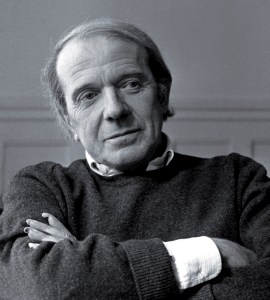
Deleuze was primarily a postmodern thinker. Postmodernism was a movement in Western philosophy that strongly criticized the notions of modernity regarding human civilization, culture, language, and history.
Generally, it is believed that the lack of something produces the desire for that thing in us. For example, if I lack money, the desire for money will emerge in me. But Deleuze tells us that it is the opposite of what seems to be the case. It is not the lack of something that produces the desire for that thing in us, rather it is the desire itself that give rise to the feelings of lacking.
Let’s imagine out of a sudden we lost our capacity for desires; now that we don’t have any desire in us, we will not feel any lacking in us, as well. This point will be made clear by the example below.
For example, if I want to travel the whole world, this desire of mine will produce a feeling of lacking in me. But let’s say I don’t have any such desire, then what will happen? I won’t feel any lacking or deprivation as I have no desire for traveling.
Therefore, according to Deleuze, it is wrong to say that the feeling of lacking or deprivation gives rise to desires, rather the feeling of lacking itself is a product of our desires.

It is also widely believed that if a person desires something, it is the person himself who desires by his own free will, and that the desires are under his control. But if we look closely, we will not find any unity in our desires. Any desire comes at any time. Unexpected desires also arise in a person’s mind which have nothing to do with his past or background.
For this reason, Deleuze believes it is not the individual who desires, rather desires are spontaneously produced in a person. Desires are not in our control. He even claim that the sense we have of ourselves, like the sense each one of us has of ‘I’ is also the product of this desiring machine. The sense that we are individuals, and we desire out of our own free will is just an illusion that desiring machine gives us.
Who am I?
I am what I desire. My desires are my personality, my identity. It is not possible to associate me with a particular desire, as my desires are always changing. I can have as many personalities, as I can have desires. All my desires are my identity. My desires are my reality, so I should not hesitate to accept my desires.
 Everyday Philosophy